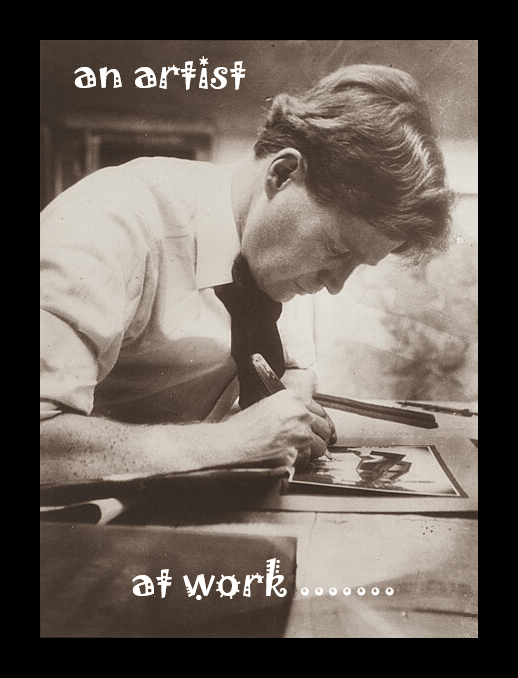
Today I celebrate the 150th birthday of Walter Burley Griffin, who designed the city is which I was born, by publishing an interpretation of how the great architect held deeply shared values with Cardinal John Henry Newman
Griffin was an idealist. He described his intentions in designing his somewhat thwarted masterpiece of Canberra thus: “I have planned an ideal city – a city that meets my ideal of the city of the future”
Cardinal Newman appreciated idealism like this writing: “I say that a cultivated intellect, because it is a good in itself, brings with it a power and a grace to every work and occupation which it undertakes, and enables us to be more useful, and to a greater number.”
Griffin wrote: “In these days of architectural renaissance… all the world over men are beginning to speak their minds in what is almost a new language in wood and stone, so that the force of new ideas and independent thinking binds fair to outrival the great, Gothic upheaval of the Middle Ages”
Cardinal Newman knew well how important it is to us as living beings to use our talents to the best and be open, when necessary, to trying new things: “In a higher world it is otherwise, but here below to live is to change, and to be perfect is to have changed often.”

This morning I asked Google AI: “What is in common between the thinking of Cardinal Newman and Walter Burley Griffin on architecture, democracy, art and society?”
The AI response started: “Although Cardinal John Henry Newman (a 19th-century Victorian theologian and educator) and Walter Burley Griffin (a 20th-century American Prairie School architect and landscape planner) came from vastly different worlds, their philosophies converge strikingly—most famously in Griffin’s 1918 design for Newman College at the University of Melbourne.
Both thinkers viewed the physical environment, human intellect, and civic life as deeply interconnected, sharing a belief that beauty and thoughtful design actively shape moral and social character. “
AI reported to me that at Newman College Griffin created “a “Gothic of the southern countries”—capturing the soaring spiritual essence and structural honesty of Gothic architecture using modern reinforced concrete and Australian stone. …….
……. Both men believed physical spaces form the human mind. Newman argued in The Idea of a University that a college’s beauty, quadrangles, and shared spaces educate students subconsciously through atmosphere and fellowship. Griffin echoed this by designing Newman College to foster “spaciousness and unity,” intending to exercise positive social and spiritual influence through design.”
As a man born in the town for which Griffin had a magnificent design, I thank the Lord for the continuing presence in our lives of great spirits like WBG and Cardinal Newman ………..
AMDG
Geoff Fox, November 24, 2026, Melbourne, Australia